
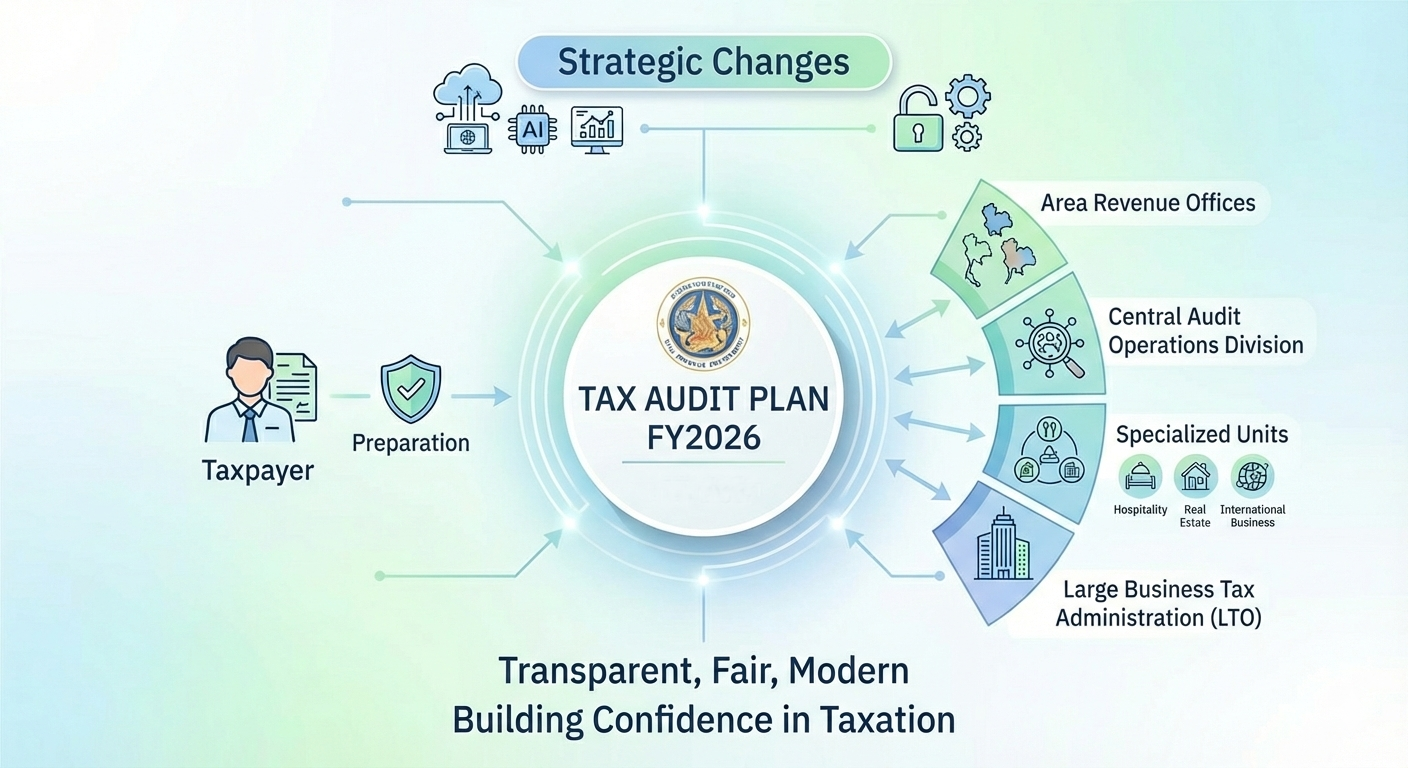
In early February 2026, the Revenue Department released on its website the “Tax Audit Plan for fiscal year 2026”. This article explores key changes in strategic framework for FY2026 tax audits, how such changes would impact taxpayers and suggests how to prepare for such changes.
The Thai Revenue Department is structured to perform tax audits through a combination of local area offices (12 regional revenue offices, 80 area revenue offices with 16 in Bangkok, and 848 area revenue branch offices), the Central Audit Operations Division, which conducts nationwide audits for businesses operating across multiple locations, or when local offices lack the capacity, and specialized units which focus on specific, high-risk sectors (e.g., hospitality, real estate, international business centers) or the Large Business Tax Administration (aka. “LTO”) which focus on large, complex corporate cases.
Tax Audit Process
Conventionally, the framework of the tax audit process would span over the following areas:
- Audit coverage – The Officers may identify and conduct tax audits according to a selective type of taxes, such as corporate income tax (including transfer pricing), withholding tax, value added tax, stamp duty or selecting a specific target group by type of business.
- Selection of audit cases was usually done by local tax offices and centralized, specialized units under the risk-based assessment approach.
- Types of audits - Audit formats and methodologies to be used would vary by types of audits.
- For a newly established company, the officers will conduct an informal tax investigation through “introductory visit” to interview staff and request documents to understand its operations. The purpose is to give initial advice that will help the company to do it right the first time.
- For the “business operational visit”, the officers visit the company once every 2-4 years to conduct information investigation to make sure continuing tax compliance of the company under their supervision. This type of audit was also used to begin an investigation on specific areas, such as transfer pricing, of the selected audit target.
- The “comprehensive audit” (aka. summons investigation) will be conducted if the Revenue officers have a reasonable cause to believe that a taxpayer has filed a false or incomplete tax return. The summons is issued, initiating a more rigorous audit process that covering all types of taxes under the Revenue Code.
- Methodologies - Details of the tax audit process are determined by the Tax Supervision and Audit Standards Division.
- Evaluation – At the end of the process, the authorities set out mechanisms for measuring the impacts of audits so as to voluntarily tax compliance is to be correctly made by a tax payer, or issuing an assessment letter for any non-compliance under the summons investigation.
With the substantial support of disruptive technology, especially Big Data and AI data analytics, the Revenue Department made strategic changes in selecting audit cases. For FY2026, the selection of audit targets by prioritizing high-risk groups and centralized selection based on risk assessment systems. Instead of each individual revenue office or audit unit identified targets under their supervision, the centralized unit will utilize its expertise and powerful IT system to determine audit targets and execute the audit process through its nationwide networks of 18,000+ personnel.
Audit targets for FY2026
List of FY2026 audit targets disclosed by the Revenue Department include:
1. Juristic person at risk under Sections 65 bis and 65 ter of the Revenue Code.
2. Businesses operating through online channels and platforms.
3. Businesses operating outside the tax system.
4. Groups of businesses with indications of potential illegality from external agencies.
5. Businesses using nominees to conduct business.
6. Juristic person at risk regarding transfer pricing issues.
Conclusion
The release of the Tax Audit Plan for FY2026 by the Revenue Department would be considered as a “wake-up call” to all taxpayers. It should signal for immediate attention of prudent taxpayers and activate their predetermined response planning, the organized action should be taken to avoid, contain damage, and prevent the escalation of a situation. In the case that the company has yet to have such plan, the company may begin with the tax health check that would assist the company to take control, understand its tax compliance position and map out appropriate preventive measures that fit with their tax position.
Benefits of tax health check to taxpayers
1. Strengthen position in time of tax audit as the well-prepared supporting documents or evidence are at hand.
2. Maintain appropriate internal controls or establish good practice for future business operations.
3. Avoid or minimize impact on cash, e.g., penalties, fees for external advisors and/or litigators.
4. Minimize penalties in case of non-compliance by demonstrating good cooperation.
5. Ensure that the company’s human resources can keep focusing on productive work.
[Contact Person: Ms. Thirapa Glinsukon, Partner and Ms. Susama Thaveesin, Director]